Writing Books Is Hard

Are you a writer who is interested in writing a book, hopefully one that will be published?

Photo by Pixabay on Pexels.com

If you are, have you ever written a book before? If not, there is a good chance that you are looking for the easiest approach to take. After all, no one wants to create more work for themselves than needed. That often results in many writers asking themselves which books are easier to get published.

When it comes to determining what type of books are easier to get published, the answer isn’t as easy to find as many individuals had hoped for. In all honesty, publishing any type of book, whether it be a children’s book or a romance novel, isn’t easy. A lot of time, hard, work, determination, and research goes into getting a book published. With that said, there are a number of steps that you can take to help you ease the process.

For starters, it is important to choose a genre, topic, or theme, that you feel passionate about.

This is particularly true with how-to books or other helpful guides. Yes, you should look at writing as a job, especially if you hope to get a book published, but writing should never seem like work. That is why it is important that you choose a genre, topic, or theme that interests you and one that you feel passionate about. For example, if you are a parent, consider writing a children’s book. If you are a science fiction enthusiast, consider writing a science fiction novel, and so forth.

Not only will choosing a genre, topic, or theme that you are interested in make it much easier for you to write a book, but it will also provide assistance with getting your book published. If you have an invested interest in what you are writing about or if you are passionate about the words that you write, you are more likely to produce better results. You are also more likely to take the time to properly proofread and edit your book, as opposed to other authors who are just hoping to make as much money and as quickly as possible.

Regardless of what type of book are you interested in writing, you should do a little bit of research first.

Photo by fauxels on Pexels.com

As important as it is to write on a topic or great a story that you feel passionate about, it is also important to know what publishers want. For example, did you know that mysteries are popular stories for chapter books and early adult books? They are and you will see if this if you take the time to research what publishers are looking for. This research is easy to do with printed resources, like the Writer’s Market books, or by using a standard internet search online.

When you write a book that focuses on a story or topic that you have an invested passion in, as well one that focuses on a topic or a story that publishers are seeking, your chances of getting your book published increase significantly. It is also important note ease of writing. When you know what you should write about, in addition to what you want to write about, the words will flow off of your fingers in no time at all.

As a reminder, there is no specific type of book that is easier to get published than others. All publishers have the same goal and that is to publish a book that will sell. For that reason, all have strict standards.

Writing Your First Book

I found this article so decided to publish it here on this blog – it’s ok I have permission!

Are you a writer who has only written web content or a writer who has only written as a hobby?

If you are, you may still have the dream of writing your own book, a book that will get published. Although most individuals who research publishing a book have already written a book, you may have yet to accomplish this important task. The good news, however, is that it may work in your favour.

If you have yet to write a book, there are a number of important steps that you will first want to take. These steps, a few of which are highlighted below, may help to improve your chances of you writing a book that will get published.

One of the first things that you will want to do, when looking to write a book that will get published, is to choose a genre.

This involves first deciding who you want to write for. Do you want to write for children, young adults, or adults? Next, decide what you want to write about. Do you want to educate your readers or give them a captivating story that they just can’t put down? As for the topic or storyline that you choose, be sure to choose something that interests you. A writer who is passionate about what they write is more likely to see success.

Once you have an idea of what type of book you want to write, as well as an idea on your theme, take the time to examine publishing companies. This is easy to do with the Writer’s Market books and other similar printed resources. Most clearly outline what types of books publishers are looking for. For example, a publisher that is accepting manuscripts for science fiction novels may give you specific tips and ideas, as well as things to avoid.

Writing a book with a theme that interests you, as well as a theme that is in demand by publishers, is one of the best ways to get your book published.

As for writing your book, it is important to start out with a plot. If you are writing a non-fiction book, such as a how-to guide, be sure to create an outline for you to follow. Fiction authors, however, should first outline a plot. Unfortunately, many authors, especially new writers, just start writing. Of course, it is important to get your thoughts on paper or on your computer, but a clear and solid plot is an important component of writing a book that will get published. Books that are just a collection of words are likely to not get published.

Once your book has been written, it is important that you do the proper amount of proofreading and editing. Many professionals vary on the number of times that a book should be proofread, but you should read through yours no less than three times. In addition to doing your own editing, you may benefit from the professional knowledge and expertise of an editor. Many have reasonable fees.

It is a wise idea to first see what many publishers are looking for.

You can do this by using the internet or printed resource guides, like the Writer’s Market. If you highlighted or recorded the information that you read, you may already have a list of publishers to submit your book to. Once your book has been proofread and edited, you are now ready to send your book to publishing companies, along with a professional cover letter. Good luck.

Photo by Pixabay on Pexels.com

Playing with words.

When writing I love to play with words. I always loved how the great, late Ronnie Barker could come up some of the best jokes by just playing with words and their meanings. There is nothing better than the famous ‘Four Candles’ sketch with Ronnie Corbert; ‘handles for forks’. He also said ” I would rather have a full bottle in front of me rather than a full frontal lobotomy”.

I have included a section from Trans-Uranic Elements: The Dark Sid of Uranus in which I have played about – I would love some feed back.

Bye the way, a ‘grumble flick’ is a reference I heard in the army, meaning a pornographic movie.

Enjoy…

“Do you know about the Witch King?” enquired Wayne, with a slight look of pain in his eye; though it may just have been  a tear of sympathy at his former predicament; or maybe it was irritated by mushroom spores that wandered lonely in a cloud, beside the river, beneath the trees, looking for a nose to make it sneeze.

“Which King?”

“The Witch King. The meanest son of a bitch ever to pop up on Uranus!”

“And how would I address this mighty King of the Witches, should I ever chance upon him?”

“Some call him … Grumbleflick!”

“Grumbleflick?”

“Yes – Grumbleflick! He has ants in his pants and doesn’t like to dance!”

“It seems to me young Elf, that you are familiar with this Grumbleflick.”

“That is a lie! No Elf would ever be a familiar to a Witch! No matter which Witch it was!”

A face totally devoid of any expression afflicted Tom momentarily, as he tried to work out what the feck these Elves were saying.

“I am trying to work out what the firkin Heck are you saying, young Elf?” probed Mad Tom of Bedlam.

“Look,” steamed Ken, “I know about Witches and I know about the Witch King Grumbleflick. But I am not his familiar. Nor do I like to be probed!”

“OK! OK! Let’s start again. Tell me about Grumbleflick!”

“He’s dead!”

“What do you mean?”

“You don’t know what dead means?”

“Yes I do – but how can he be dead?”

“He’s a Witch!”

“And?”

“Lots of them are dead. They seem to like it that way – it’s a great tax saving tip!”

“So King Grumbleflick is a stiff?”

“Not all of him, some bits are quite floppy.”

“How does he look?”

“He uses his eyes, like most folks; but apparently he has a deathly stare. And an awful twitch in his left eye…”

“So he is a winking Witch King!”

“Yes the Witch with a twitch.”

“And what of his countenance?”

“His what?”

“His mien?”

“Yes, he’s mean alright! Wouldn’t give you the time of day – not that that would bother you!”

“I mean, what does his gob look like!!!!”

“Ugly fucker by all accounts. Face like a bucket of smashed crabs. And pale!”

“A pail of smashed crabs?”

“Not pail! Pale!”

“Pale?”

“Did you ever go to school? I mean his face is very white!”

“So he is wan?”

“Yes, just him; the only one.”

“Wan!”

“I’m a little lost here,” said Magdalene. “I can’t quite tell the difference between one and wan!”

“It’s two,” chortled Wayne.

“What?”

“Yes, one and one is two!”

“But the difference is nothing!”

“True; one minus one is the same as zero to the power of ten!”

“What?”

There was a brief pause as the reader tried to pick up the thread; sewing and reading simultaneously is very impressive, and could save a stitch in Time.

“I know that, but what about ‘one’ and ‘wan’?”

“So you’re not sure about the ‘one’ one and the ‘wan’ one?”

“That is what I said!” screamed Magdalene.

“She’s a bit of a one,” said Wayne to Ken.

Irritated Tom decided to take over.

“When he mentioned the paleness of the wan one he meant the King of the Witches.”

“So Grumbleflick is wan?”

“That’s the one!”

“Yes – deathly white!”

“I see! He is the winking wan King!”

Tom looked to Magdalene – who looked to all purposes like a totally muddled Basset Hound on the streets of Benidorm when the coffin dodgers are in full swing.

“So; we are looking for Grumbleflick, the winking wan King of the Witches! Where can I find him?”

“I haven’t got the foggiest!” declared Ken. “I’m happy for the Witches to be a legend of some renown but you can kiss my sweet patooty if you think I’d want to know where they live!”

“What about you?” asked Magdalene, homing in suddenly on Wayne like a Labrador on a high pitched fart.

“He lives in Witchland!” spurted Wayne.

Ken Tucky went red with anger, rage and constipation.

“I told you to forget that!” screamed Ken at his trembling chum.

“I forgot to remember to forget!” bleated Wayne.

“Which land is Witchland?” asked Tom.

“Yes,” said Ken. “Though they do say this land is my land, this land is your land, and his land is Witchland!”

“What land?”

Creative writing and frustration.

Not many people are happy with the first draft.

The first version of my Master’s thesis was so bad and in such juvenile language, that I just deleted it totally and started again from scratch. The second version had about 3 revisions before submission – it passed first time.

With creative writing I still start with a fountain pen and a bottle of ink as I find I can get my ideas down faster this way. Then the second part of creating is to type up and develop ideas. Then it goes on the backburner for a while before reviewing.

And this is when the frustration starts.

Before submitting a poem there may be one word that just doesn’t feel right and I can agonise over it for months or years. A paragraph in a short story or a character name that just doesn’t feel right; is it Dave Jordan or Dave Wright?

With a novel?

There are at least four sitting on my hard drive, waiting for the final edit. There is always a chapter that doesn’t aid the continuity or develop a character or set a scene or even make me laugh!

It has to be done.

As we move out of the dystopian year of 2020 I am committing to finishing more. To reduce the amount of time I agonise on a word or a paragraph. To publish more.

I just went to my notes and found nine working titles for books, four of which already have first drafts saved and the other 5 with outlines planned.

So I look back for inspiration. There are plenty of motivational quotes about and I often include them in my blogs. Two of my favourites are on YouTube, from Denzel Washington and Admiral William McRaven.

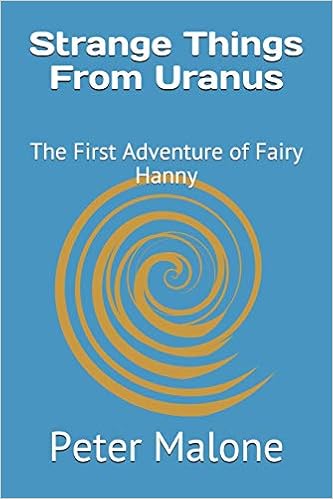
I just watched both again before setting out to work on ‘Trans-Uranic Elements: The Dark Side of Uranus’ the second in my Tales of Fairy Hanny. I intend to publish it on Amazon before January has finished. Please tell me off if I don’t.

And I just made my bed.

Overcoming Procrastination – get into the flow!!

The Art of Rapid Problem Solving

When you think of problem solving, what comes to mind? For most of is it will probably be someone sitting at a desk, scratching their head and chewing a pencil. That is to say that we normally think of problems as things that we do slowly over time and in a considered fashion.

In reality though, this often is not the case. Often we will be forced to solve problems rapidly and on the fly and this is when things can get difficult. Here we’ll look at why this ability is so important and at what you can do to improve it.

Action Sports

The best place to study ‘rapid problem solving’ is in the world of action sports. This will include sports like snowboarding, surfing, racecar driving and others that involve last-minute reflexes and reactions. While you might think that these actions occur automatically and in the moment, they can nonetheless still be considered as a form of decision making.

For instance, while it might be pure impulse to go around an obstacle, you still need to think which way around that obstacle you want to go – which should normally mean weighing up which route would be quicker, which has the most obstacles further on and which will make it easiest to balance as you travel. And you won’t be faced with one decision like this but countless ones.

In every-day life we make decisions like this all the time too – right down to knowing when to cross the road. So how can you improve this kind of decision making process?

Flow States

The answer might lie in ‘flow states’. Flow states are a psychological phenomenon that allow us to make rapid decisions accurately that we would otherwise not be capable of. During these states we are completely focused on the matter in hand and we are able to perform flawlessly almost without thinking about it. The world seems to slow down and we become untouchable. And interestingly, it seems to be very similar to the state of flow we get into when we’re very focused on a work project.

This state is triggered by numerous neurochemicals including dopamine, norepinephrine, anandamide and endorphins. It is similar to the fight or flight response (which normally deadens creativity) but where you remain relaxed and in control the whole time.

How to Get Into Flow

So how do you get into flow? The answer seems to be that you need to be completely focused on what you’re doing, which happens when you are a) very passionate about it, or b) you believe your life is on the line. To be better at rapid decision making you need to be 100% present and as with anything, the best way to accomplish that is to practice. Practice doing things you care deeply about and your rapid decision making may just improve!

Creativity, Mindfulness and Daydreaming

In Defense of the ‘Constant Chatter’

Mindfulness, presence, flow states and meditation are all popular concepts right now. In an age where we are constantly stressed, constantly distracted and always being pulled from one thing to another, the idea of calming the mind and being able to rise above the constant chatter is very appealing.

But while this is true, it’s also important not to throw the baby out with the bath water. Being ‘present’ is great because it allows you to react more quickly, to enjoy the moment without daydreaming and to let go of stresses, fears and the infamous ‘inner critic’. On the other hand though, there is a value to that ‘chitter chatter’ and to being distracted and it’s important that we don’t forget this.

Why it’s Good to Sometimes Daydream

The key point here is that while mindfulness and presence are good, they shouldn’t be sought after as the only valuable brain state. In other words, we should also value the benefit that can come from simply letting the mind wander and from daydreaming about things.

Whereas mindfulness and flow states are synonymous with the front portion of the brain shutting down, daydreaming is achieved when we engage our ‘default mode network’. This is a series of interconnected brain areas including the medial prefrontal cortex, the posterior cingulate cortex and the parietal cortex among others.

Together, these brain areas allow our mind to wander through memories and ideas while we are busy doing monotonous tasks. This is why you’ll often find yourself daydreaming when walking, when washing the dishes or when doing a host of other things.

And it’s this brain state that Albert Einstein credits with his discovery of the special theory of relativity. He attributes his ‘dull’ job at the patent office with allowing his mind to wander so that he might uncover ideas that would change the world forever.

Many other geniuses, creatives and other key influential figures also describe similar processes leading to their breakthroughs and discoveries. This is also when you or I are most likely to solve problems facing us in our daily lives, or just to imagine some wish-fulfilling scenario in which we’re performing in a rock band. And guess what? During all these experiences, you couldn’t be further from presence or mindfulness.

So the moral of this story is that the default mode network is another brain state worth focusing on and that your ‘inner critic’ isn’t all bad.

Common Roadblocks to Getting into Creative Flow

You know the feeling. There’s a deadline looming, and your mind has gone completely blank. Nothing, nada. It’s like your brain has frozen. Luckily the latest research shows us the most common roadblocks to creativity, and how to move past them and get on with the job.

Fear of failure

Most people are afraid of failing because they see it as a one-way street to disaster, rejection, and a stain on their reputation forever. Perversely, fear of failure is the mirror image of perfectionism. The idea that nothing you can do will be good enough, and that this failure defines your identity.

Fear of failure means you’re less likely to take risks, and you put off even starting. And those are two things that can kill creativity stone dead. Redefine creativity as a series of experiments, with failure as a kind of course-correction and an inevitable part of the process.

There’s not enough time

The ticking clock is another creativity killer. If you’re like most people, your schedule is probably crammed, and you feel like you’ll never catch up. If your checklist just keeps growing, you won’t be able to relax in the creative process and let the ideas flow.

A surprising way to find more time is to quarantine some chillout time in your diary. Priorities some downtime to listen to music, meditate, or just sit quietly. You’ll feel much less stressed and open to the creative flow.

You’re still staring at the screen

Sitting at your desk, staring at the computer or the blank page is not a good way to get creative. If you’ve been trying to write or problem-solve and it’s just not happening, the best thing you can do is go for a walk or make a coffee. Get out of the environment that’s keeping you stuck, get moving, and your mental gears can disengage and relax enough to be ready when inspiration strikes.

You’re feeling negative

Negative thinking can stop creativity in its track. If you’re sitting there frowning, and thinking you can’t do it, you’re pretty much guaranteeing that you won’t be able to do it.

Pessimism and negative self-talk set up a vicious cycle of gloom and low energy. Reject that self-defeating attitude and give yourself a pep talk. Reframe your task and just promise yourself you’ll write down whatever comes into your head, just to get the process started. Remember, first drafts are invariably not your best product, because that’s what a first draft is for! You’ve done good work before, you’ll do it again. Tell the muse you’re ready and get writing!

Creative writing

I have decided to change my approach to this blog.

I’ve had a lifetime of creative writing, from short stories and poems in School and University magazines, to self publishing on Amazon; helping with scripts for school plays in my teaching career; to workshops as a student and as a tutor.

Professionally, I teach Mathematics and Physics in High school – and I encourage my students to be creative. I once worked on some research at the University of Essex with a Computing lecturer who was a former Art teacher. He reckons you need to have a more creative mind as a Mathematician than as an Artist – there is a good point for debate.

Most of this blog has been extracts from my books, short stories and poems. I have another blog about my journey into online business and as this has been more successful in terms of followers, I will now use some of the concepts I learned there to update this blog.

So from now on there will be articles about Writing, Goal Setting, Motivation etc, interspersed with my own efforts.

If anyone would like to add a short story or poem please let me know.